Ignacio Acosta
Archaeology of Sacrifice
Client
Client
ZF Art Foundation
ZF Art Foundation
SECTOR
SECTOR
Art & Culture
Art & Culture
SERVICE
SERVICE
Editorial Design
Editorial Design
Year
Year
2020
2020
About
About
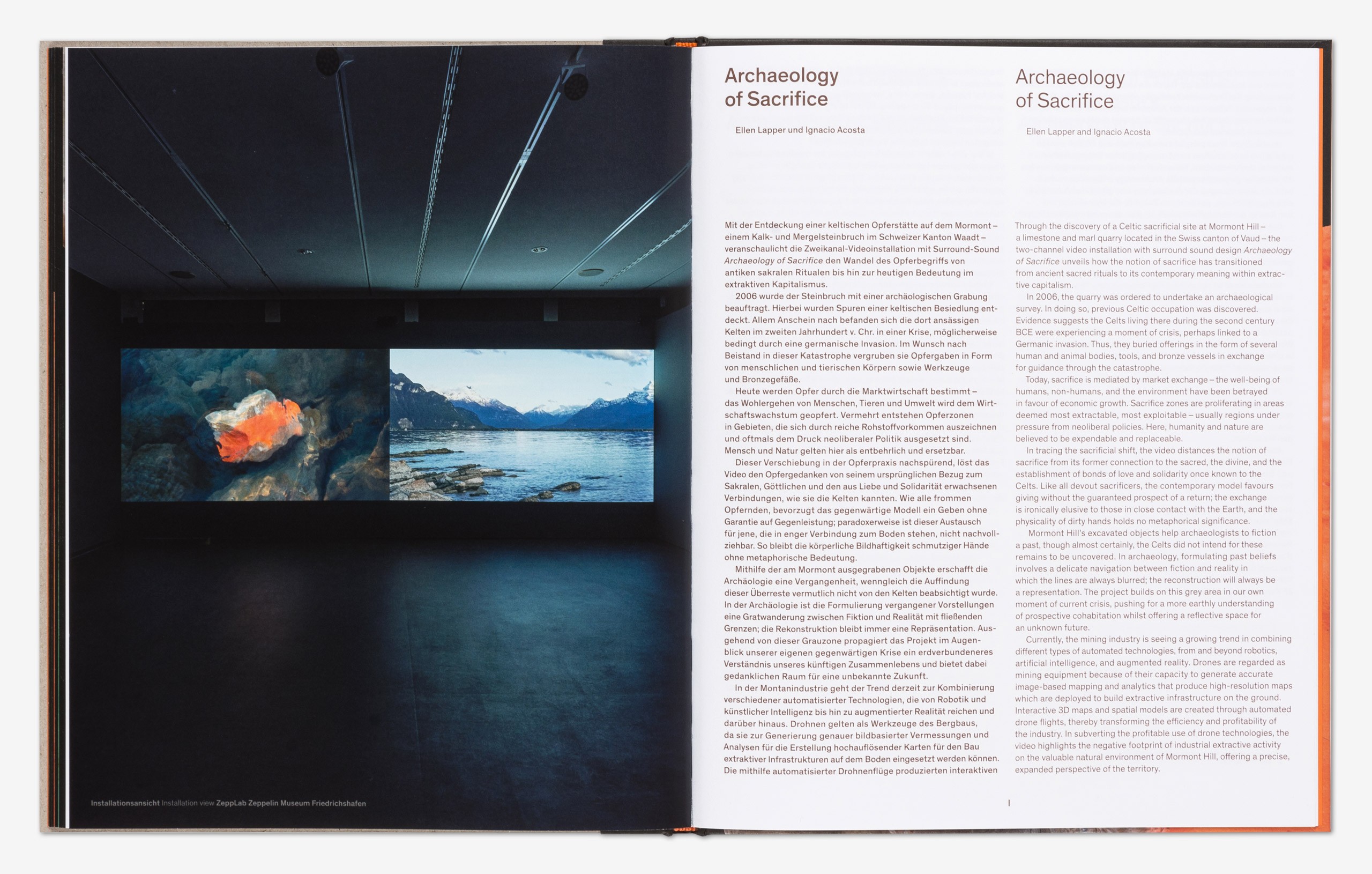
Ignacio Acosta’s Archaeology of Sacrifice takes the discovery of a Celtic sacrificial site at Mormont Hill in Switzerland as its point of departure. The two-channel video installation examines how the meaning of sacrifice has shifted from sacred ritual to a structural condition of contemporary extractive capitalism. While the Celts buried human and animal bodies, tools, and vessels in response to crisis, today sacrifice is mediated through market logic, rendering both land and life expendable.
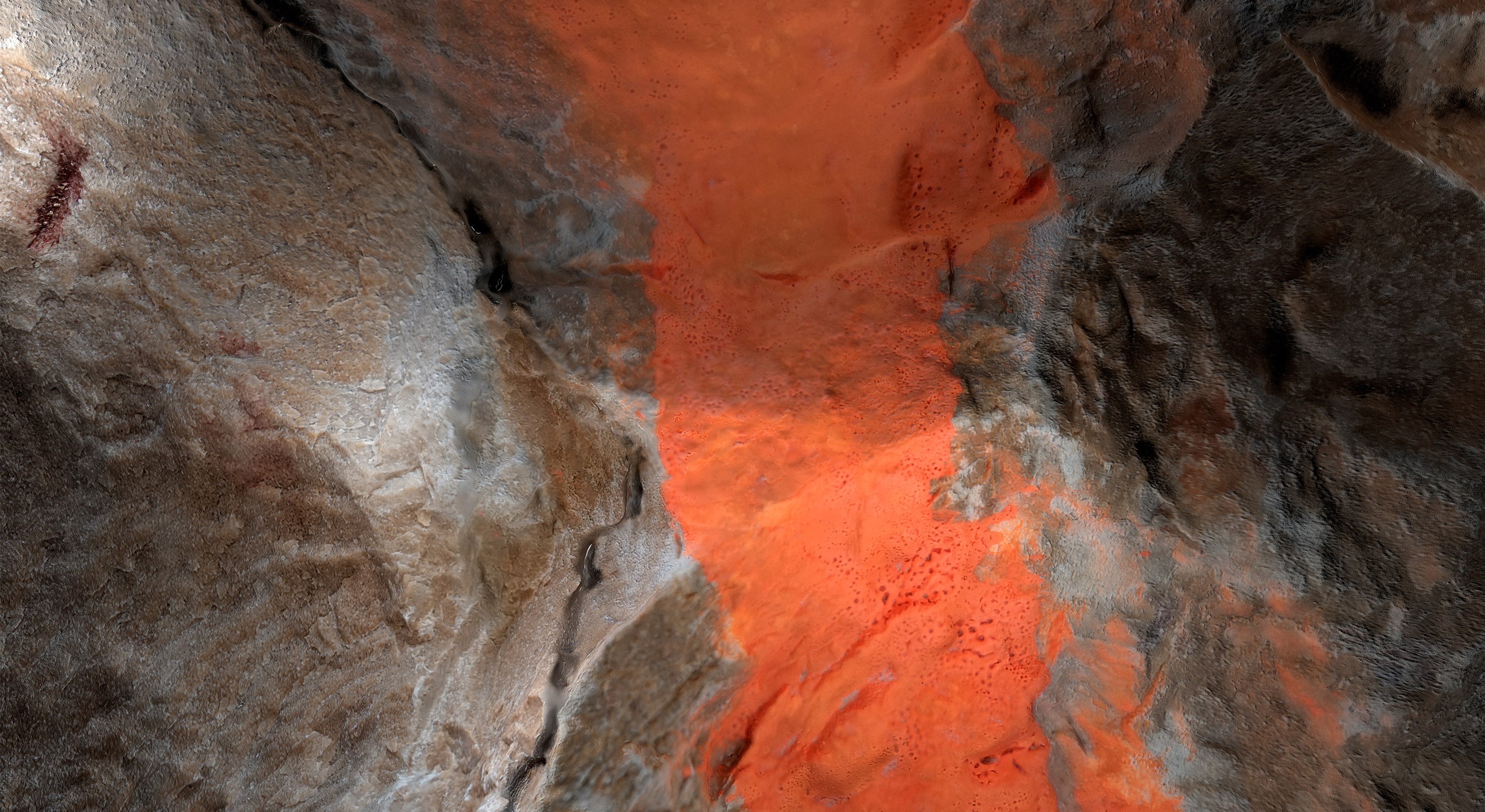
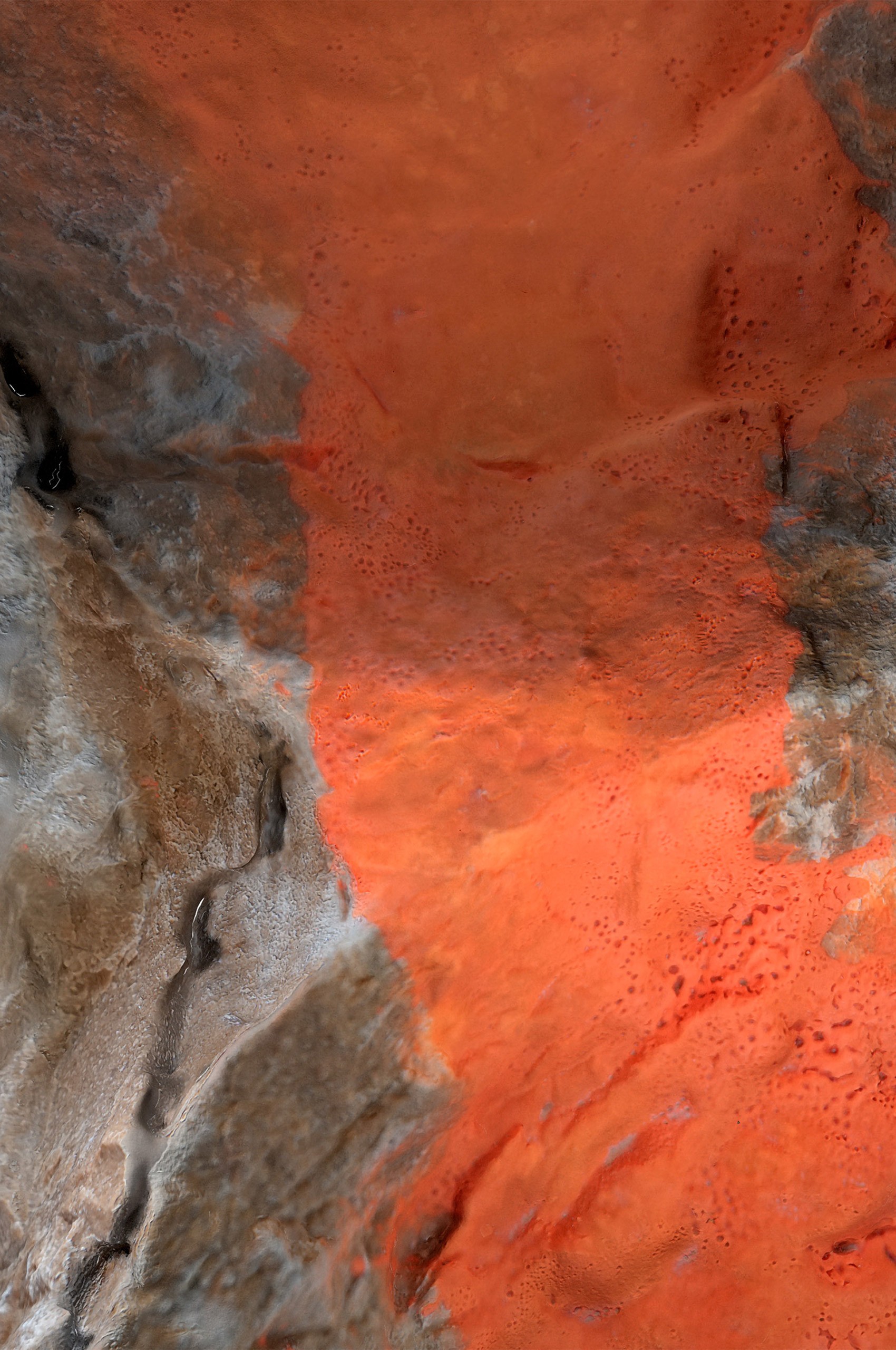
Moving between archaeology and speculation, the work reflects on how histories are constructed and how crises are narrated. Excavated objects become fragments through which a past is reconstructed, while the present appears as another moment shaped by exploitation and erasure. Landscapes, archival material, drone imagery, investigative close-ups, and photogrammetry-based 3D models form a layered visual narrative that addresses the precarious condition of the planet.
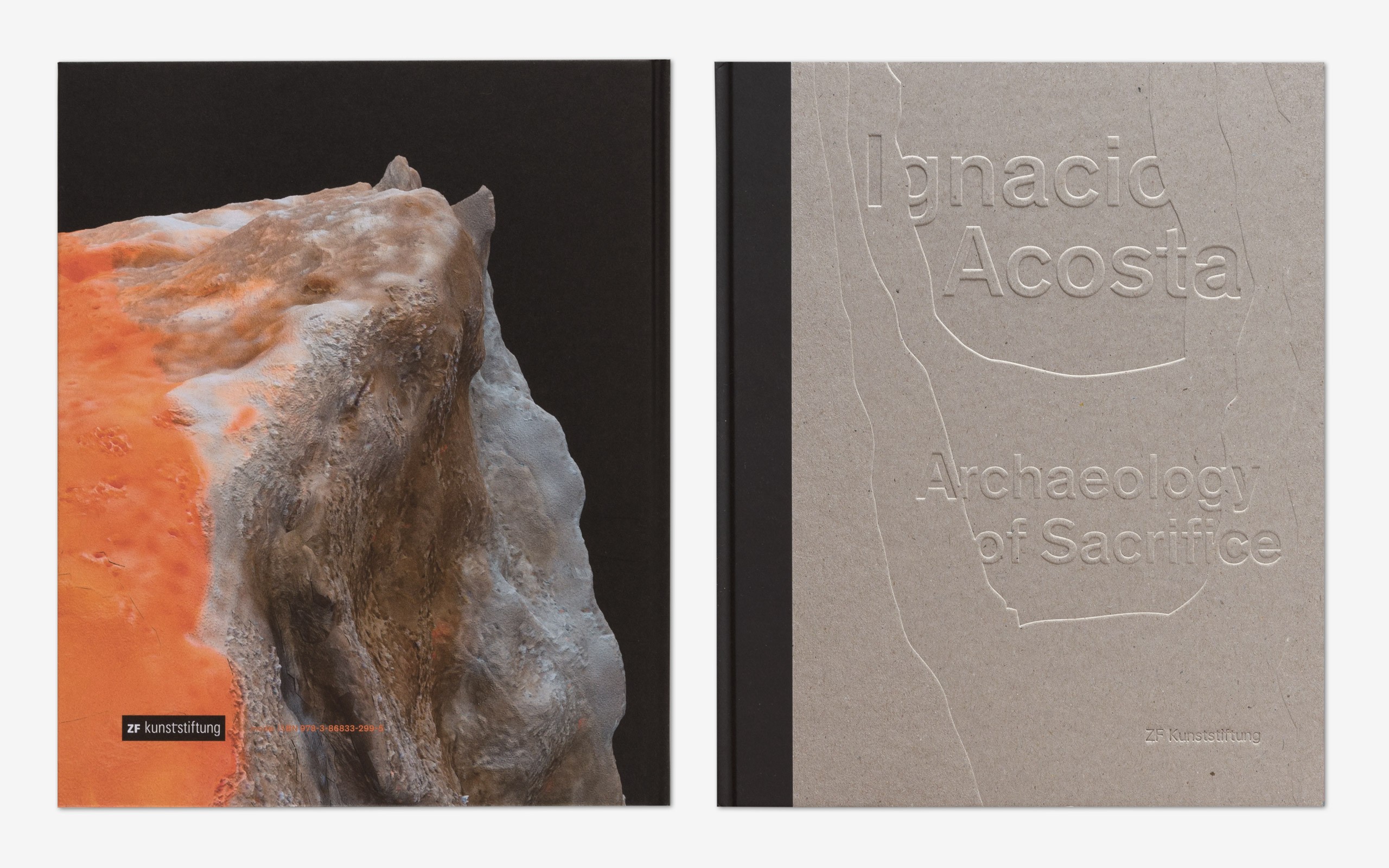
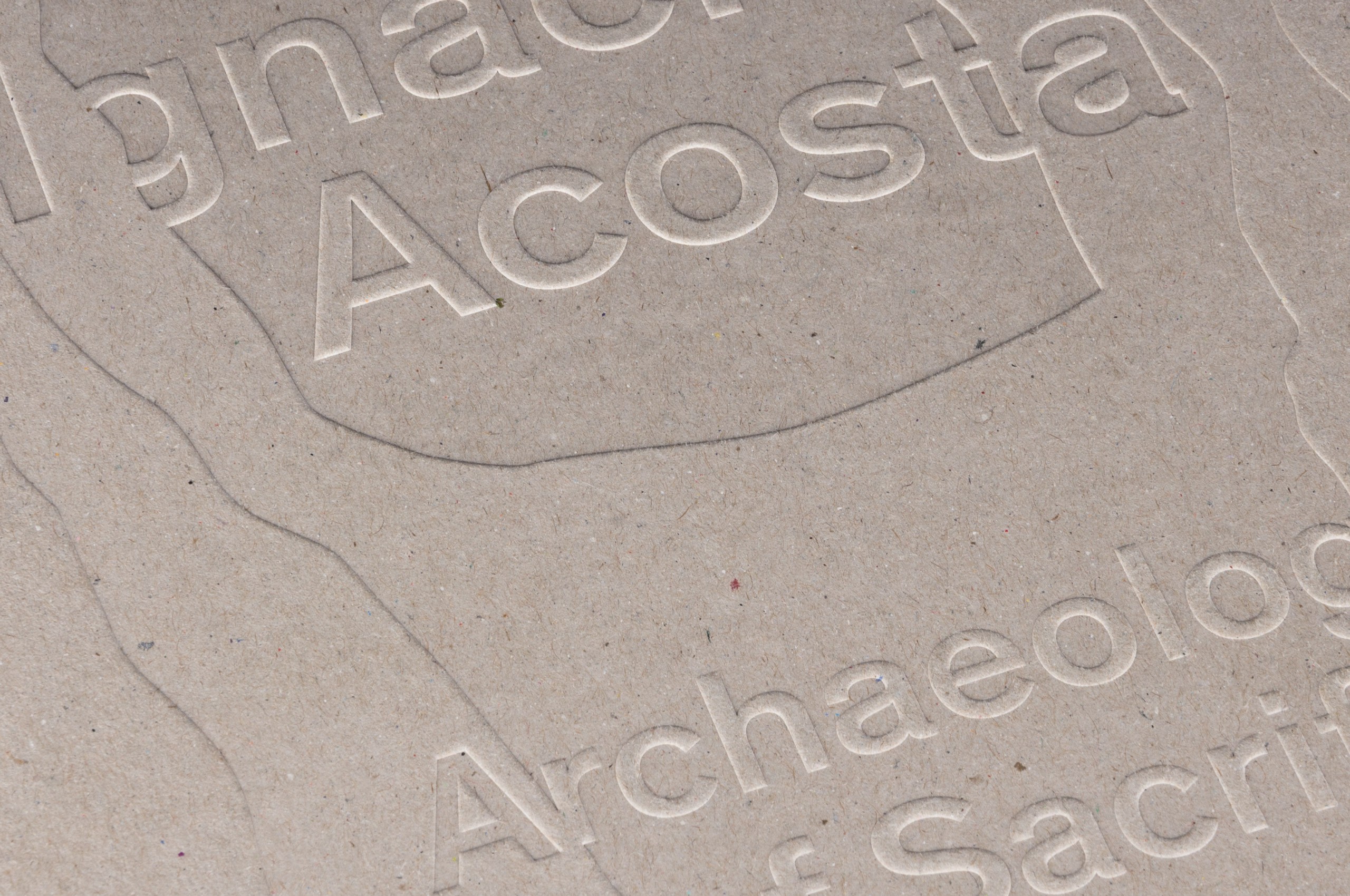
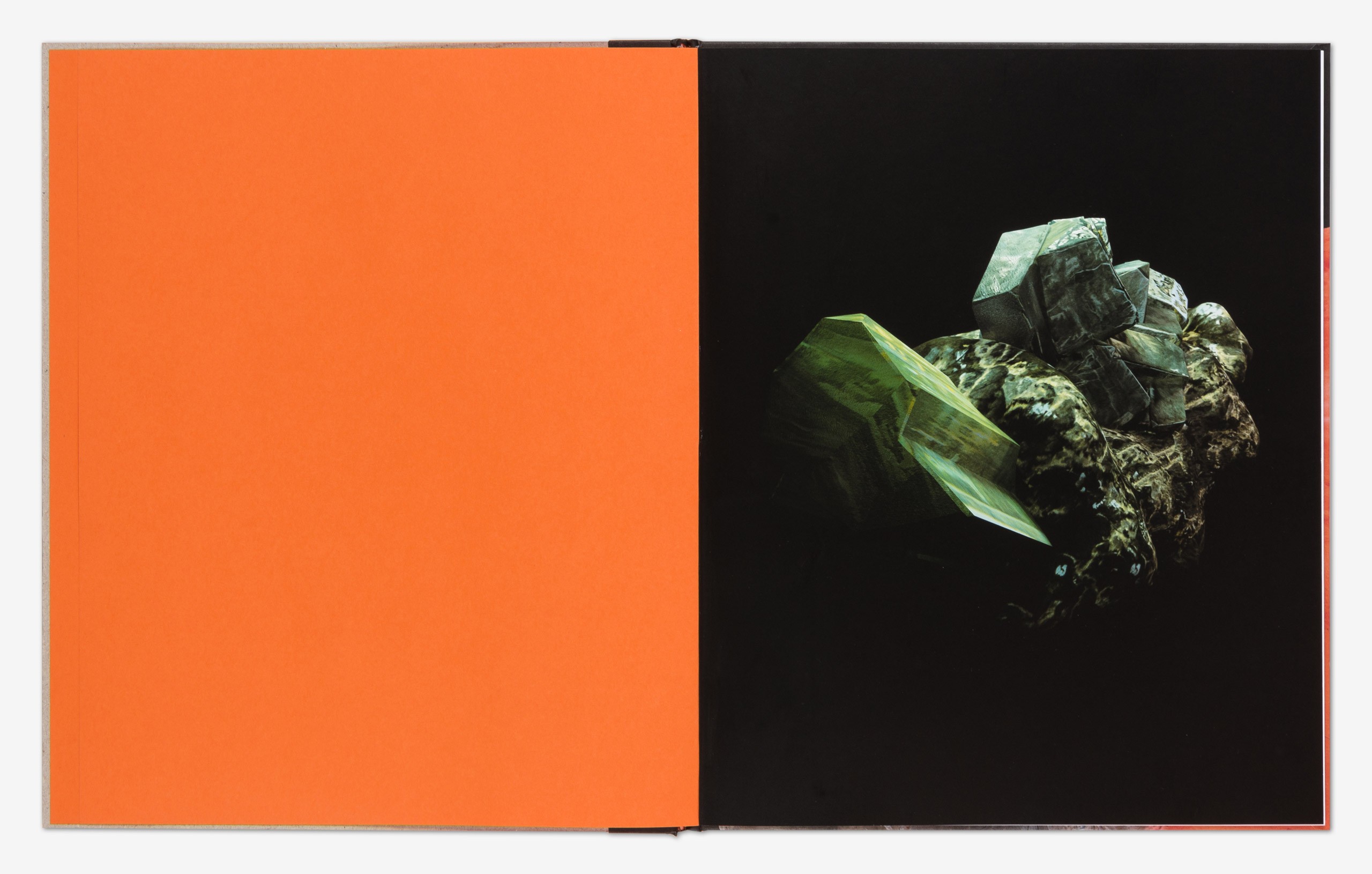
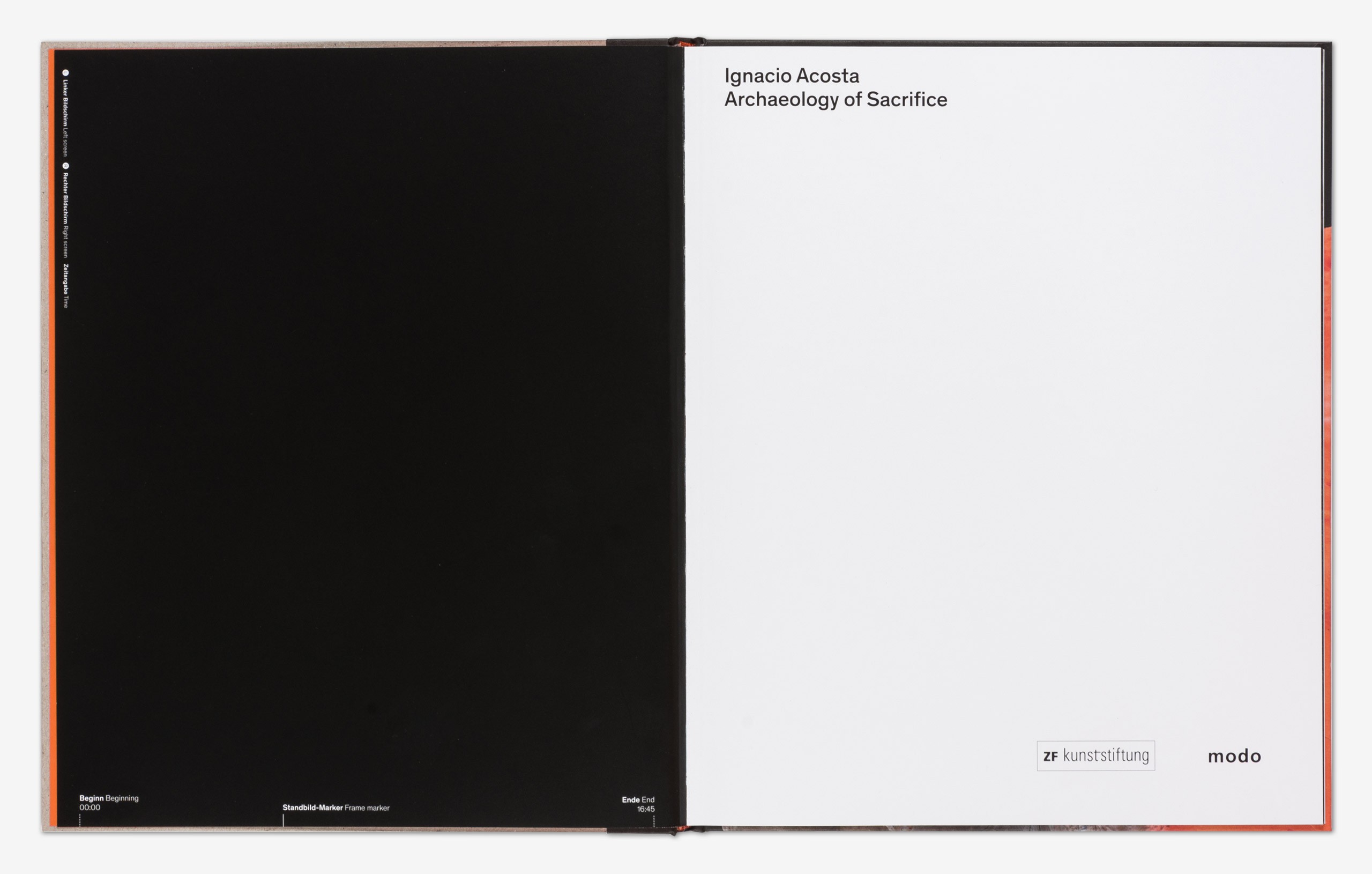
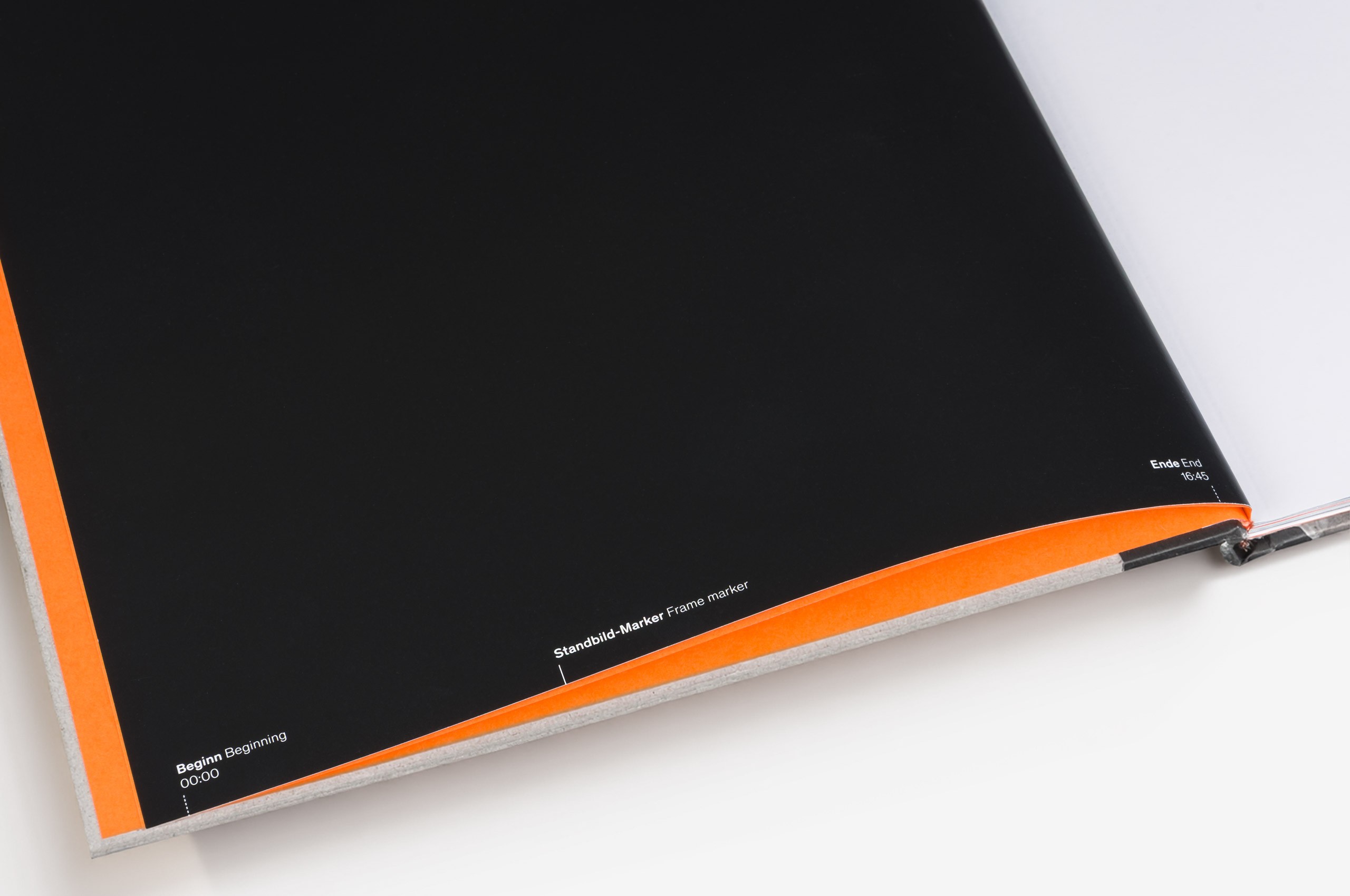
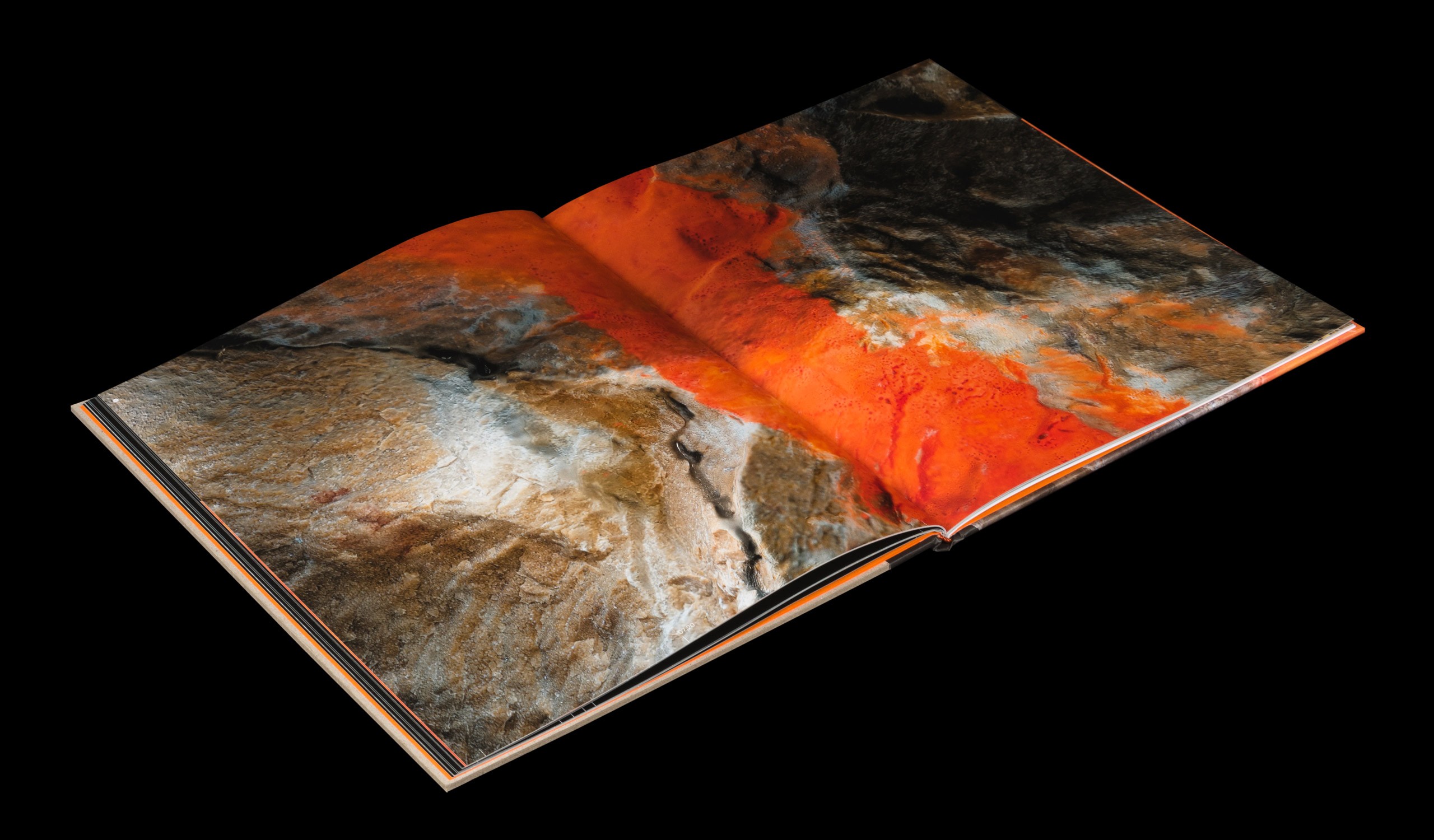
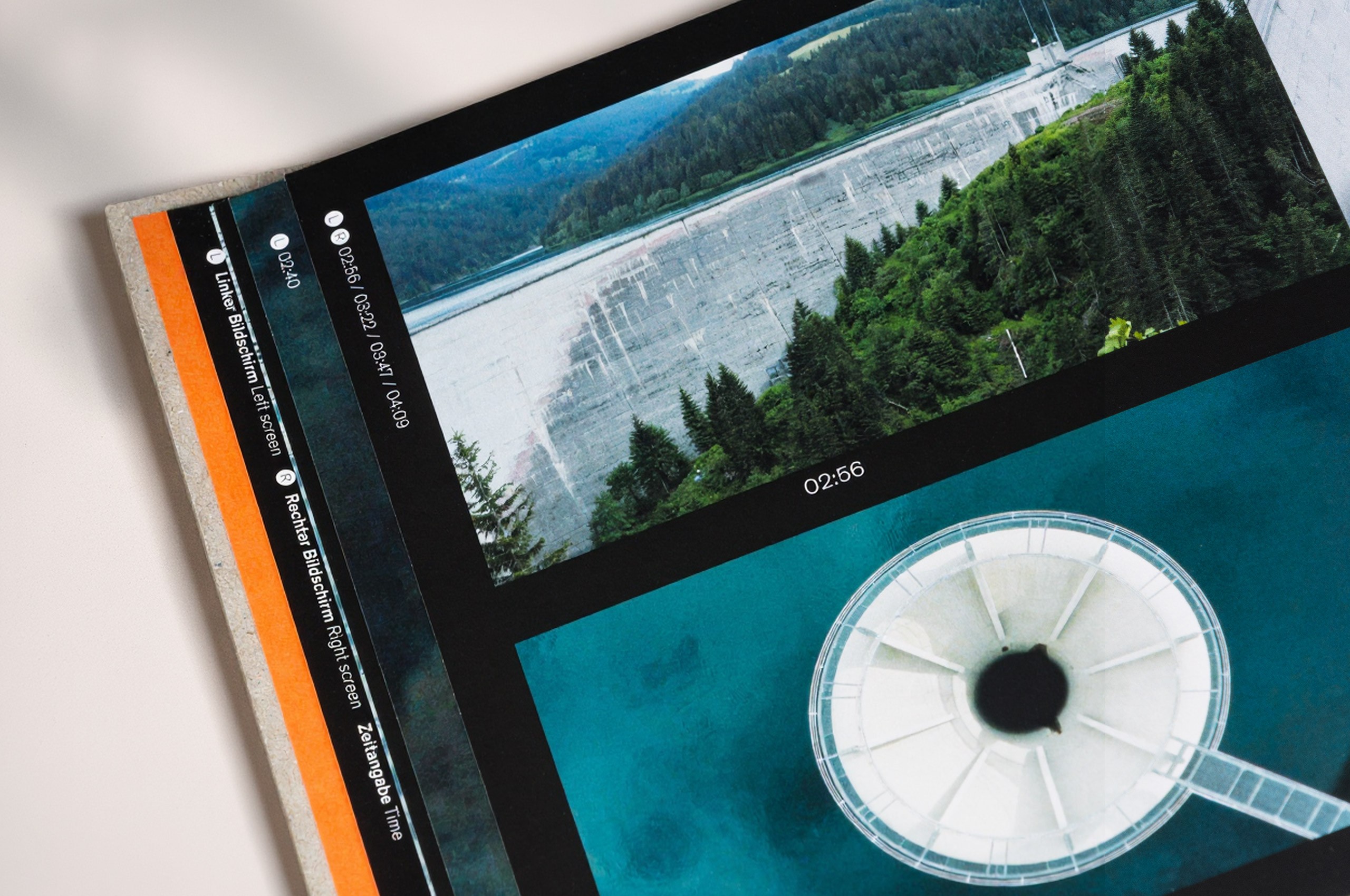
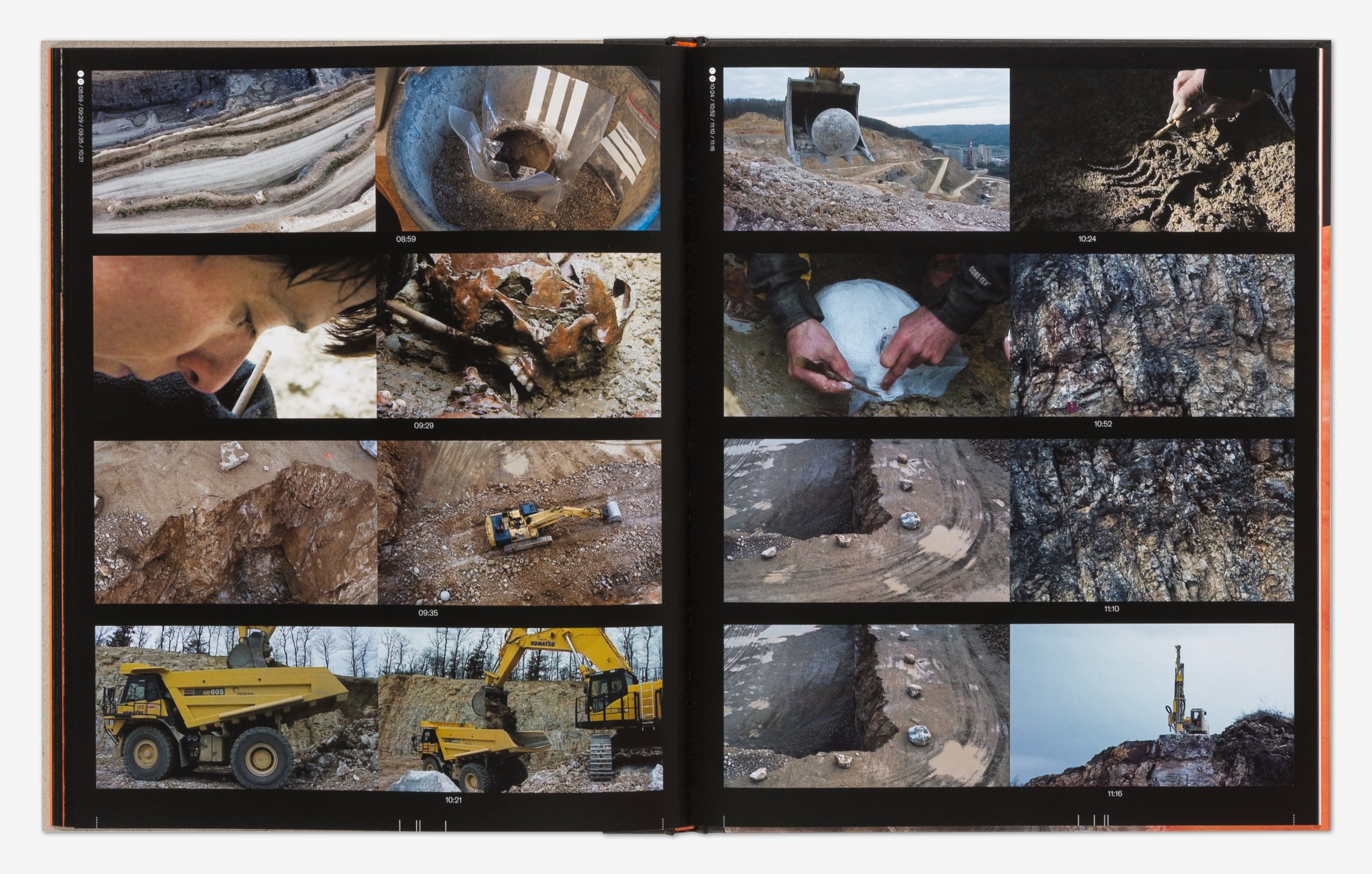
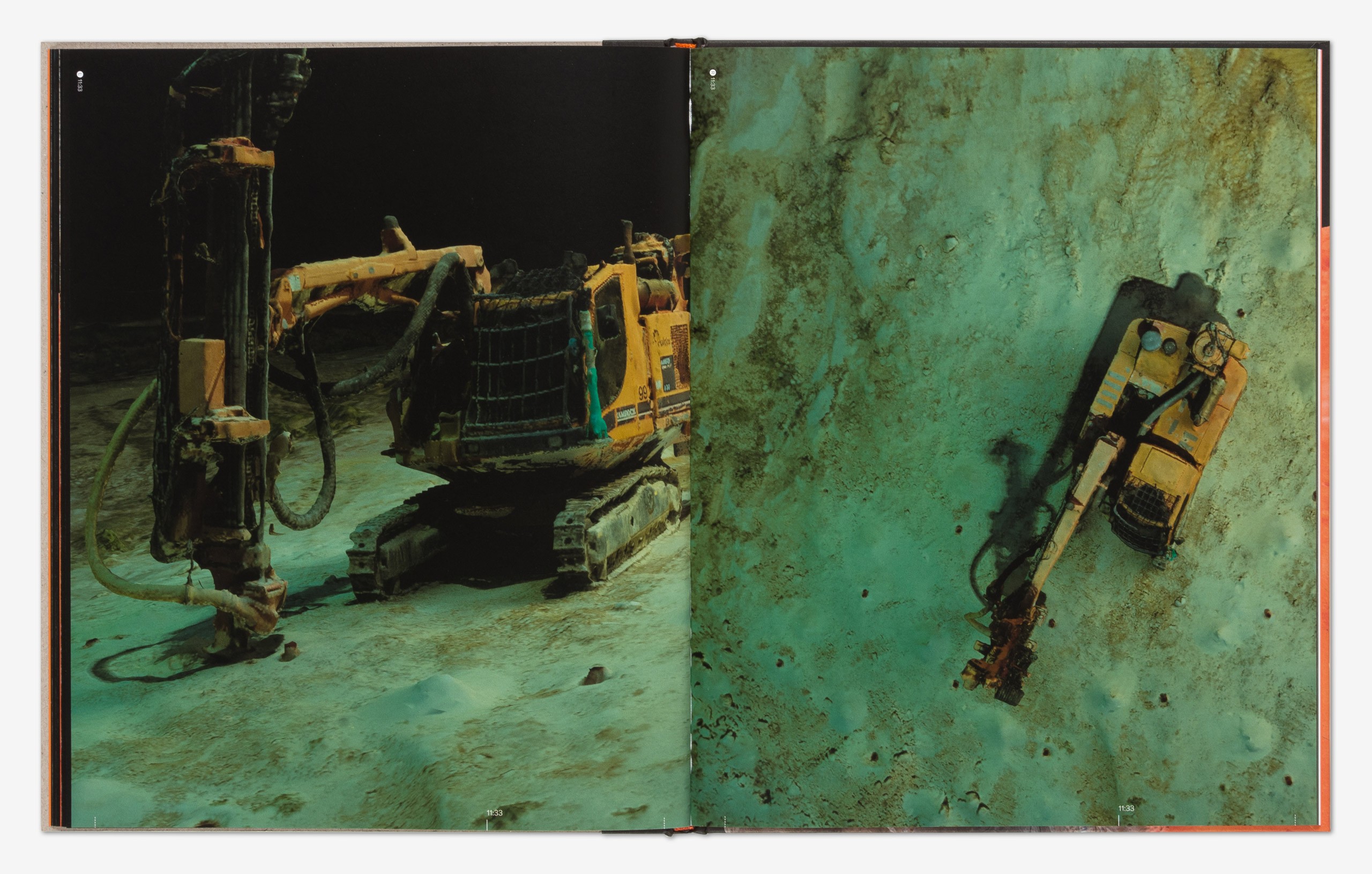
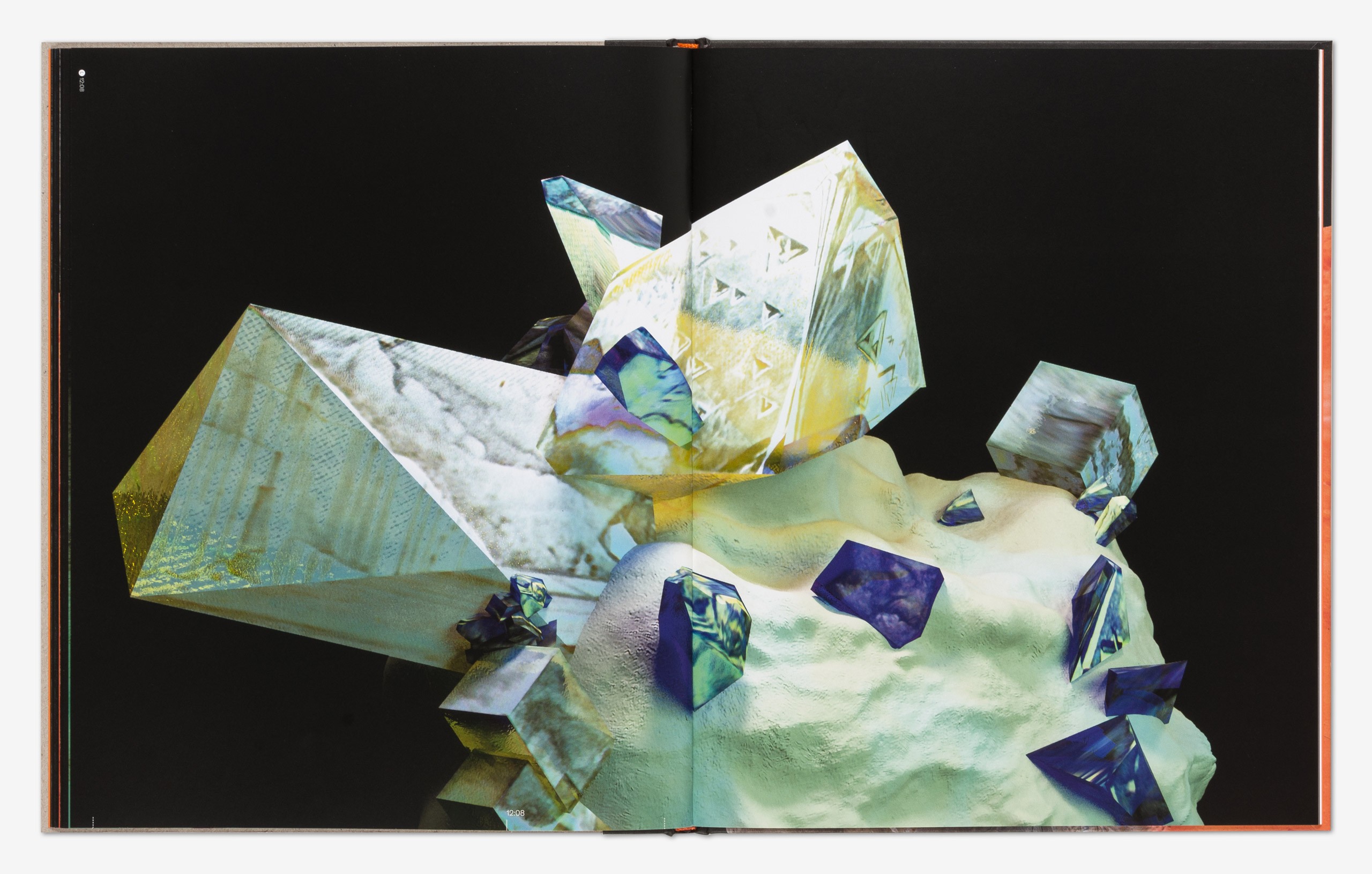
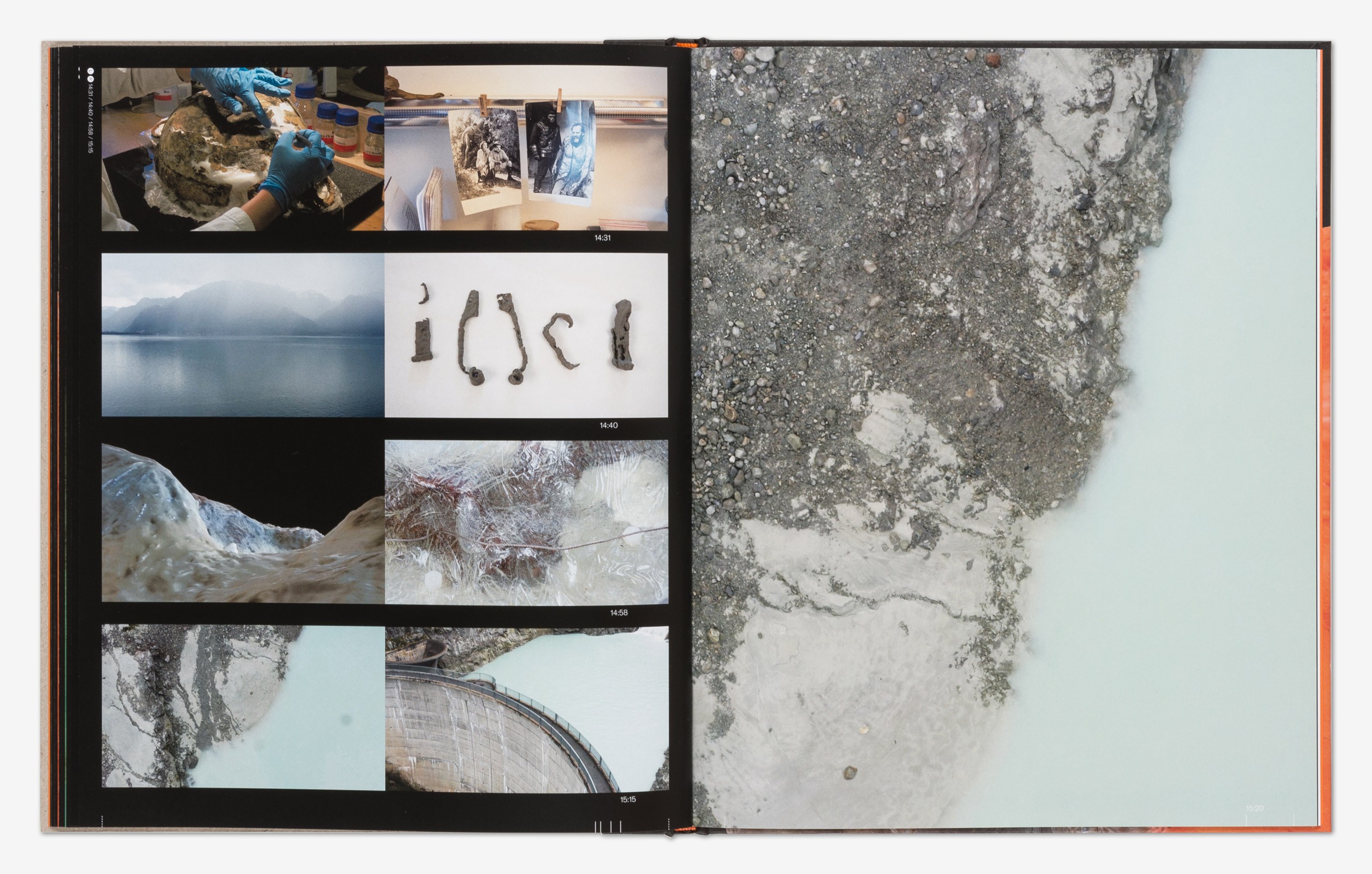
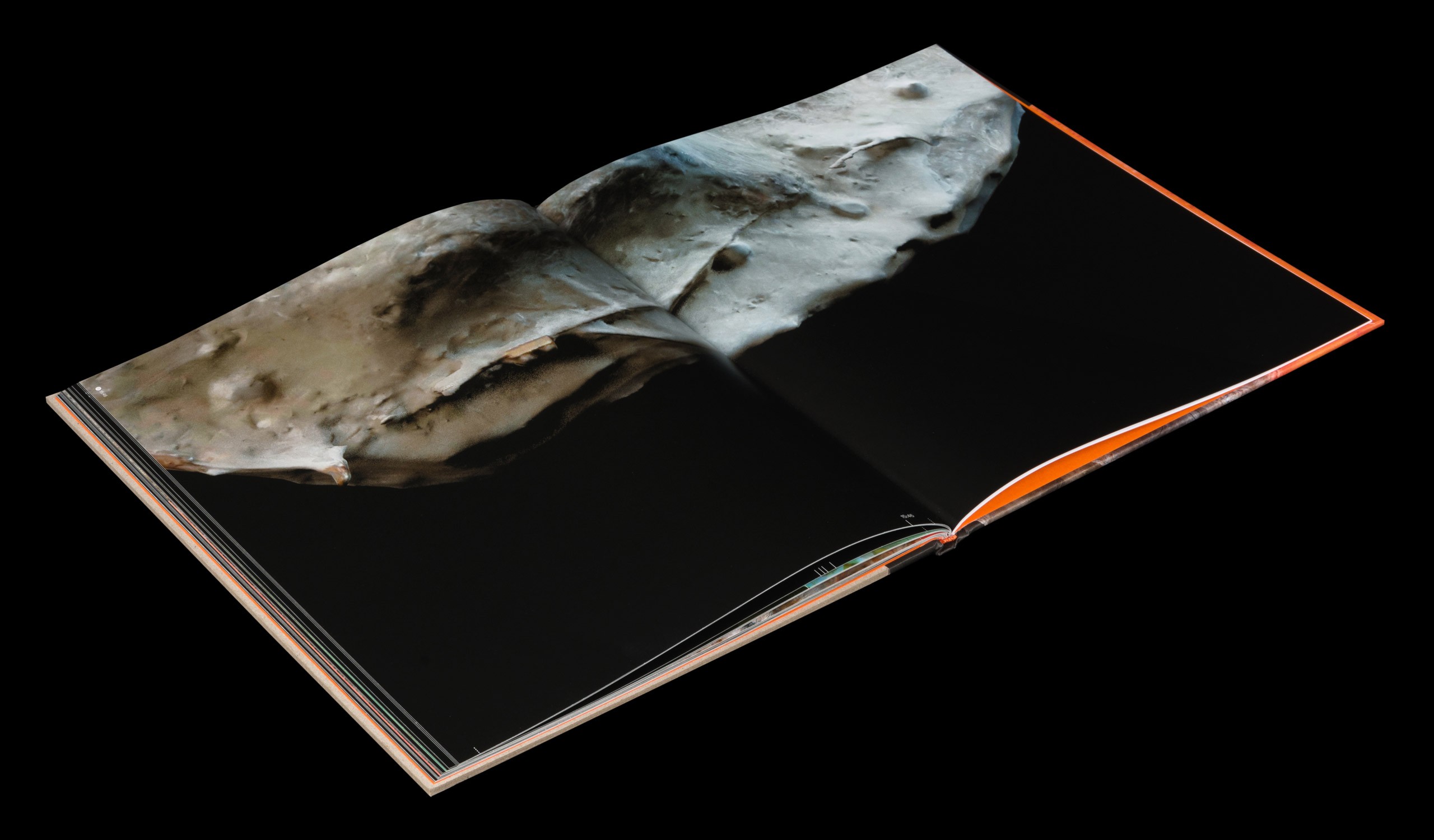
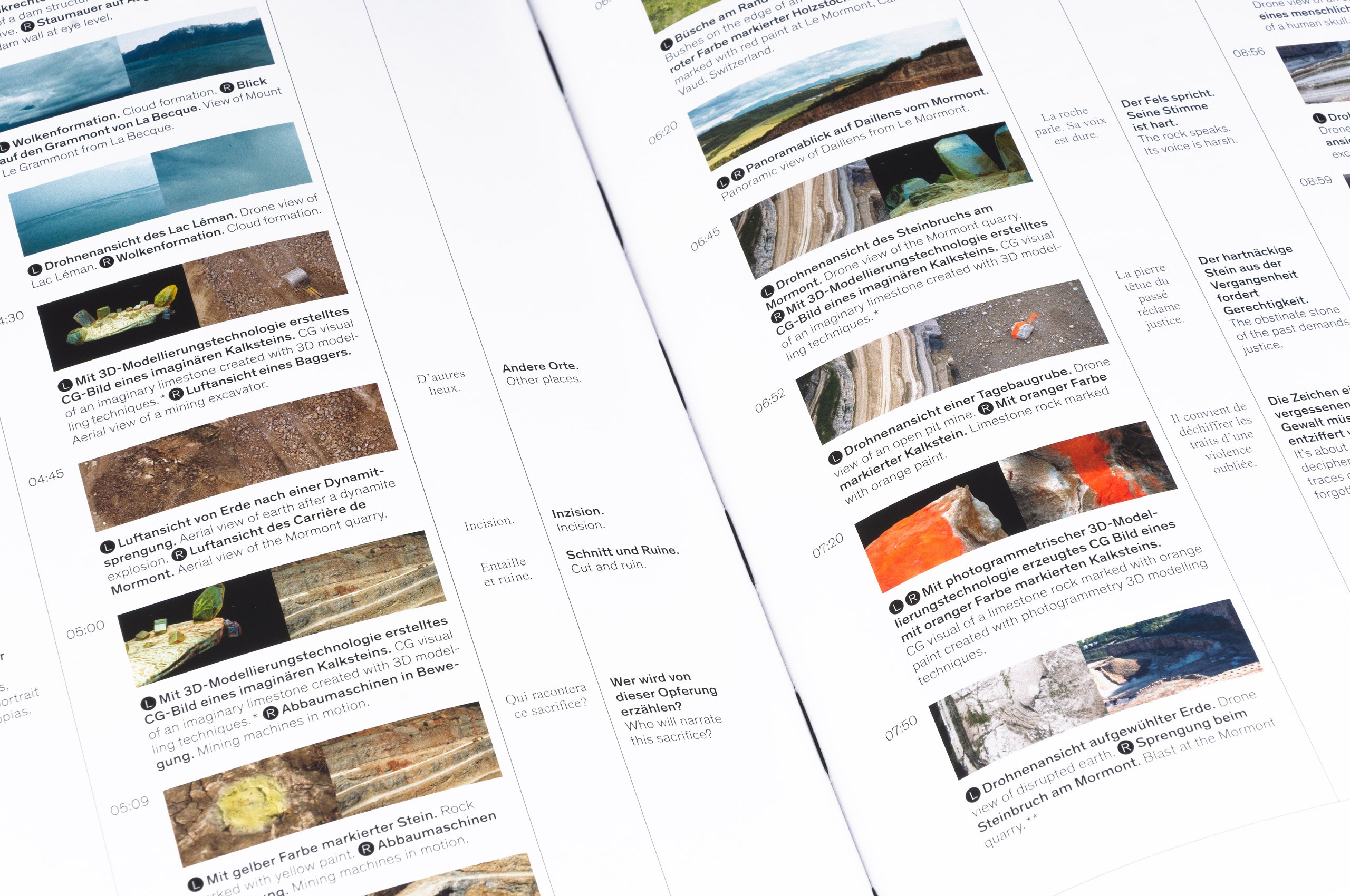
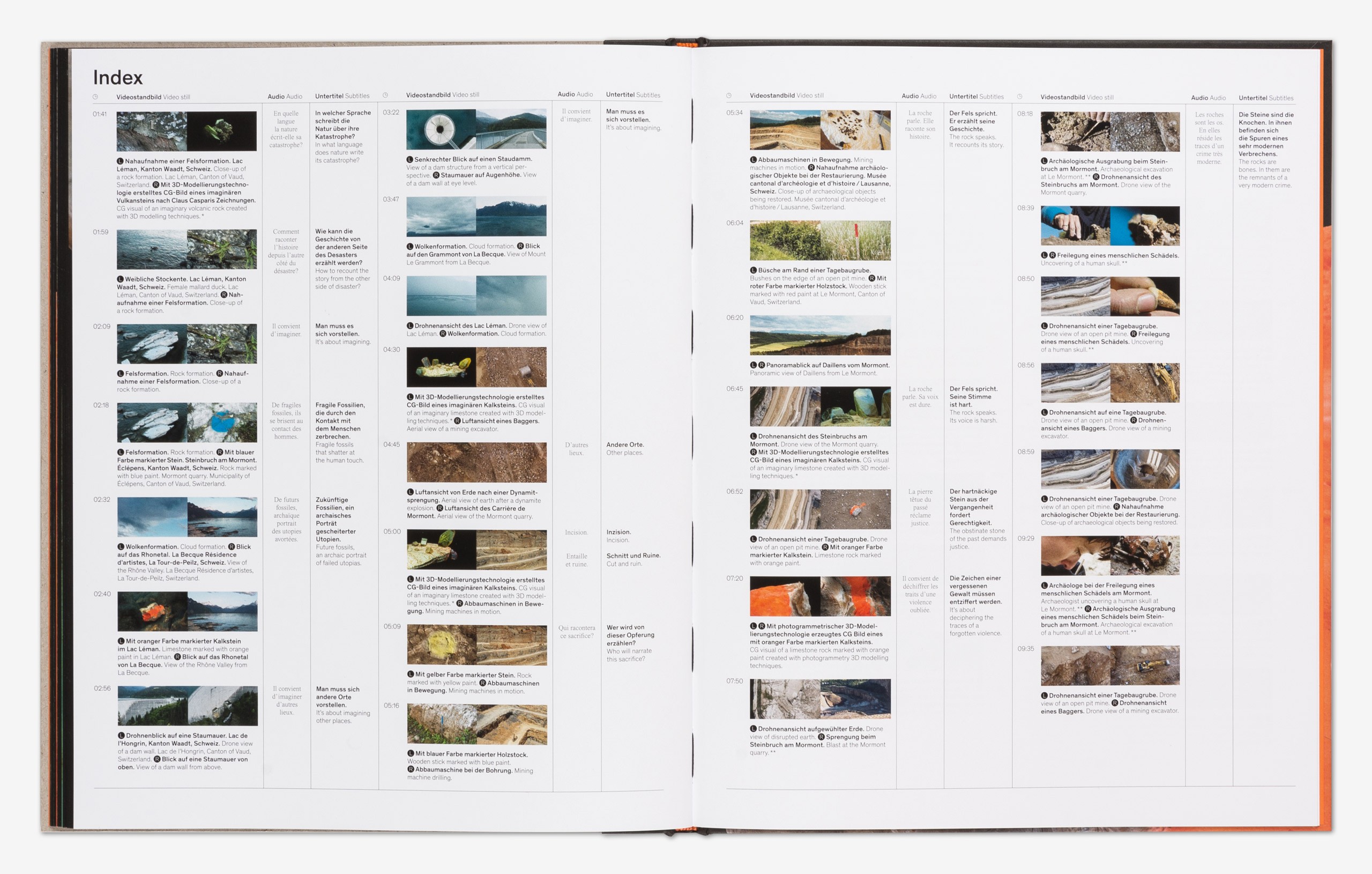
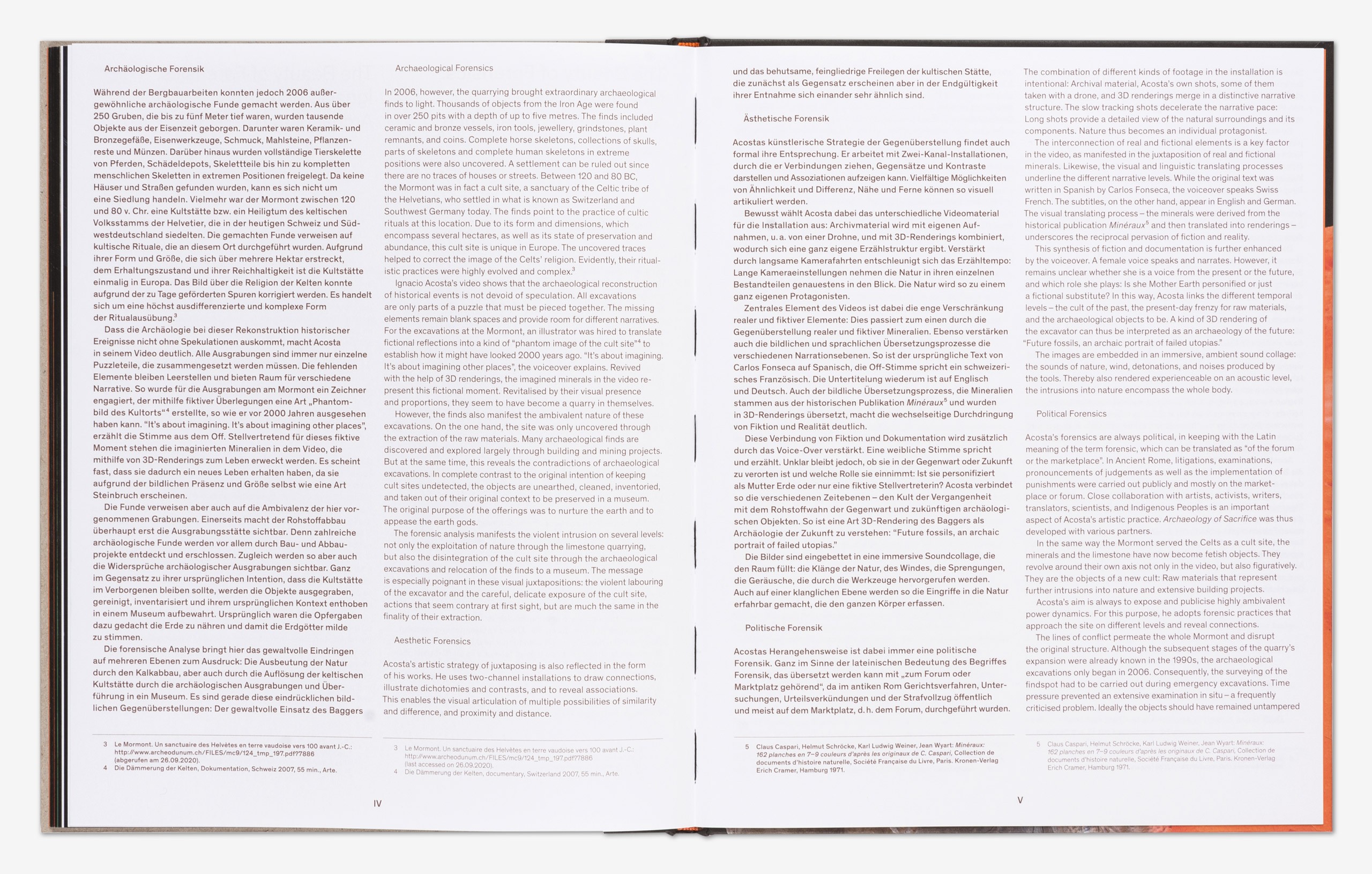
The publication begins with the three-level embossed cover of the stylized quarry at Mormont Hill, pressed into raw cardboard. The tactile relief refers to the material act of extraction and the incision between nature and culture that underlies the work. We translate the temporal structure of the video installation into print: instead of conventional pagination, each image is marked with a timecode that situates it precisely within the film sequence. The book is divided into an image section and a text section, a distinction emphasized through a change of paper stock. A single spot color structures the material and reinforces the conceptual clarity of the design. This approach establishes a precise system for communicating a time-based work in static form, addressing the inherent challenge of translating moving image into a book.
Ignacio Acosta’s Archaeology of Sacrifice takes the discovery of a Celtic sacrificial site at Mormont Hill in Switzerland as its point of departure. The two-channel video installation examines how the meaning of sacrifice has shifted from sacred ritual to a structural condition of contemporary extractive capitalism. While the Celts buried human and animal bodies, tools, and vessels in response to crisis, today sacrifice is mediated through market logic, rendering both land and life expendable.
Moving between archaeology and speculation, the work reflects on how histories are constructed and how crises are narrated. Excavated objects become fragments through which a past is reconstructed, while the present appears as another moment shaped by exploitation and erasure. Landscapes, archival material, drone imagery, investigative close-ups, and photogrammetry-based 3D models form a layered visual narrative that addresses the precarious condition of the planet.
The publication begins with the three-level embossed cover of the stylized quarry at Mormont Hill, pressed into raw cardboard. The tactile relief refers to the material act of extraction and the incision between nature and culture that underlies the work. We translate the temporal structure of the video installation into print: instead of conventional pagination, each image is marked with a timecode that situates it precisely within the film sequence. The book is divided into an image section and a text section, a distinction emphasized through a change of paper stock. A single spot color structures the material and reinforces the conceptual clarity of the design. This approach establishes a precise system for communicating a time-based work in static form, addressing the inherent challenge of translating moving image into a book.
Credits